
Choose Gear for Your Sound—Not Someone Else’s
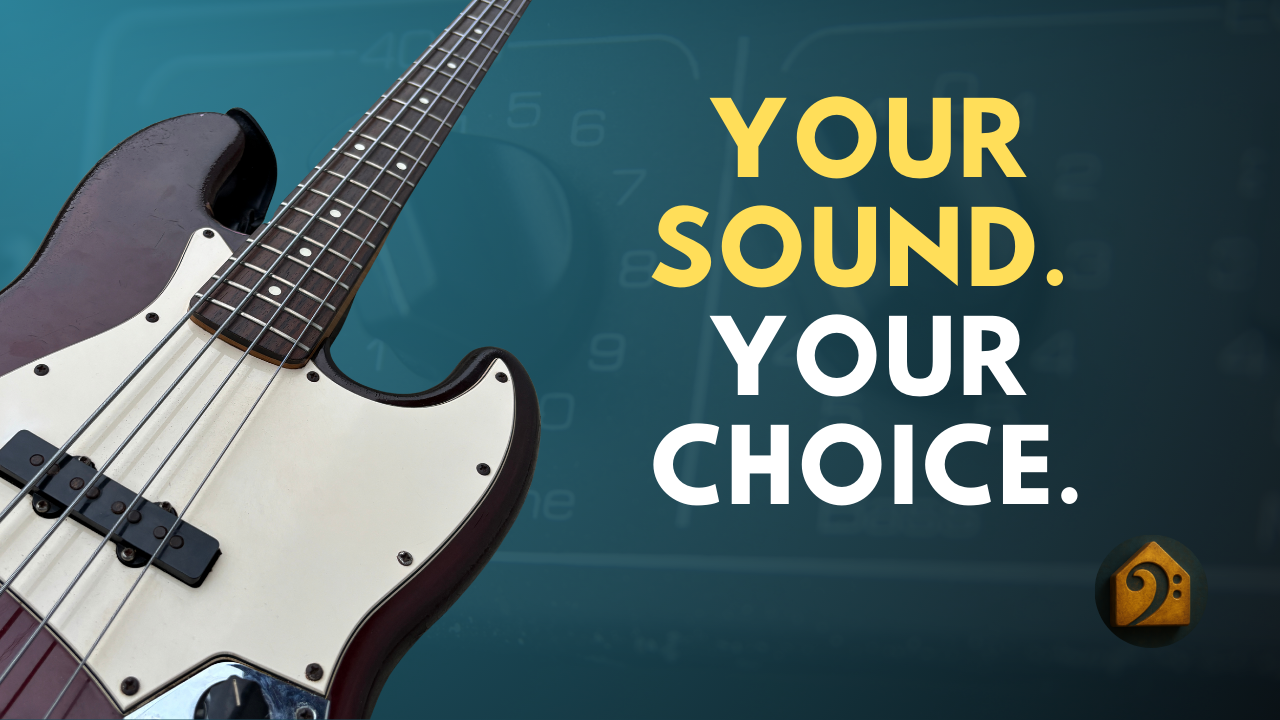
Choose Gear for Your Sound—Not Someone Else’s
Most musicians don’t struggle with gear because they lack information.
They struggle because gear decisions quietly become identity decisions.
A bass, an amp, a setup—these aren’t just tools. They feel symbolic. They seem to say something about seriousness, taste, legitimacy. And once that happens, clarity disappears.
Gear stops being about sound and starts being about comparison.
That’s when musicians lose trust in their own ears.
Your Sound Comes First—Always
Every great bassist you admire had a concept of sound long before the gear was iconic.
The gear didn’t create the voice.
It supported a voice that already existed.
Jazz legend Ron Carter has spoken often about sound as an extension of intention, not equipment:
“Your sound is your signature. That’s what people recognize before anything else.”
That signature doesn’t come from copying a rig. It comes from knowing what you want to hear—and choosing tools that make that sound accessible and reliable.
Why Hero Worship Breaks the Signal
It’s natural to look to heroes. Their records shaped your ears. Their tone changed how you hear the instrument. Wanting to understand how they got that sound is healthy.
Problems start when imitation replaces inquiry.
When you buy someone else’s setup without understanding why it worked for them, you inherit their constraints along with their tone. Different hands. Different touch. Different musical context.
Funk pioneer James Jamerson didn’t sound like James Jamerson because of flatwounds or an old P-Bass alone. He sounded like Jamerson because his hands, feel, and musical priorities were unmistakable.
The gear amplified that.
It didn’t invent it.
Elitism Distracts from Function
Elitism rarely shows up as arrogance. It shows up as advice that sounds reasonable but isn’t contextual.
“You’ll outgrow that.”
“Serious players use this.”
“That’s fine… for now.”
Those statements shift attention away from function and toward status. Instead of asking Does this help me play my best? musicians start asking What does this say about me?
Gear should reduce friction, not add pressure.
If a piece of gear makes you tense, self-conscious, or hesitant, it’s not aligned—no matter how respected it is.
The Question Gear Should Answer
Before choosing gear, ask a more important question than What should I buy?
Ask:
What do I need my sound to do?
Sit underneath the band or speak clearly on top?
Bloom slowly or articulate immediately?
Feel warm, dry, aggressive, round, focused?
Once the function is clear, gear decisions simplify.
Studio icon Pino Palladino has built a career on adapting sound to context, not clinging to a single setup:
“The job is to make the music feel right. Whatever helps me do that is the right choice.”
That mindset removes ego from the equation.
Consistency Beats “Perfect Tone”
One overlooked aspect of personal sound is reliability.
Great gear choices make your sound consistent across rooms, gigs, and sessions. They help you trust what’s coming out of the instrument so you can focus on music instead of correction.
Jazz innovator Jaco Pastorius once said:
“I don’t practice bass—I practice music.”
That philosophy only works when the instrument responds predictably. Gear that supports consistency disappears from your attention. Gear that fights you becomes the focus.
Gear as a Relationship, Not a Statement
Your relationship with gear should deepen over time, not demand constant replacement.
That doesn’t mean never changing anything. It means refining thoughtfully instead of chasing validation. Adjusting setup. Learning how your instrument responds. Letting familiarity work in your favor.
Bassist and bandleader Esperanza Spalding has spoken about sound as an extension of identity:
“Music is a reflection of who you are and what you’re willing to listen to.”
If that’s true, then gear choices are part of how you support that reflection—not how you perform someone else’s.
The Disappearing Test
One of the best ways to evaluate gear is simple:
When you play, does it disappear?
If you stop thinking about your setup and start thinking about phrasing, time, and interaction, the gear is doing its job. If you’re constantly adjusting, compensating, or worrying, something is misaligned.
That misalignment isn’t a failure.
It’s feedback.
Sound as Self-Expression
Your sound is one of the most honest forms of self-expression you have.
Before anyone hears your notes, they hear your choices—how you touch the instrument, how you shape time, how you let sound speak or stay out of the way. Gear doesn’t create that voice. It either supports it or interferes with it.
Being true to your personal concept of sound isn’t about rejecting influence. It’s about letting influence pass through you instead of replacing you.
When gear aligns with your sound concept, playing feels less like proving and more like speaking. You stop reaching for permission. The sound starts to feel like it belongs to you.
Closing Thought
Choose gear that helps your voice come forward.
Choose tools that support how you hear, feel, and communicate—not how you think you’re supposed to sound.
That’s not elitism.
That’s not imitation.
That’s integrity.
And over time, integrity is what turns sound into voice.